Micro-Resonant Chromatism:
The Eclectic Aesthetic of Kris De Ruysscher
19 August 2026
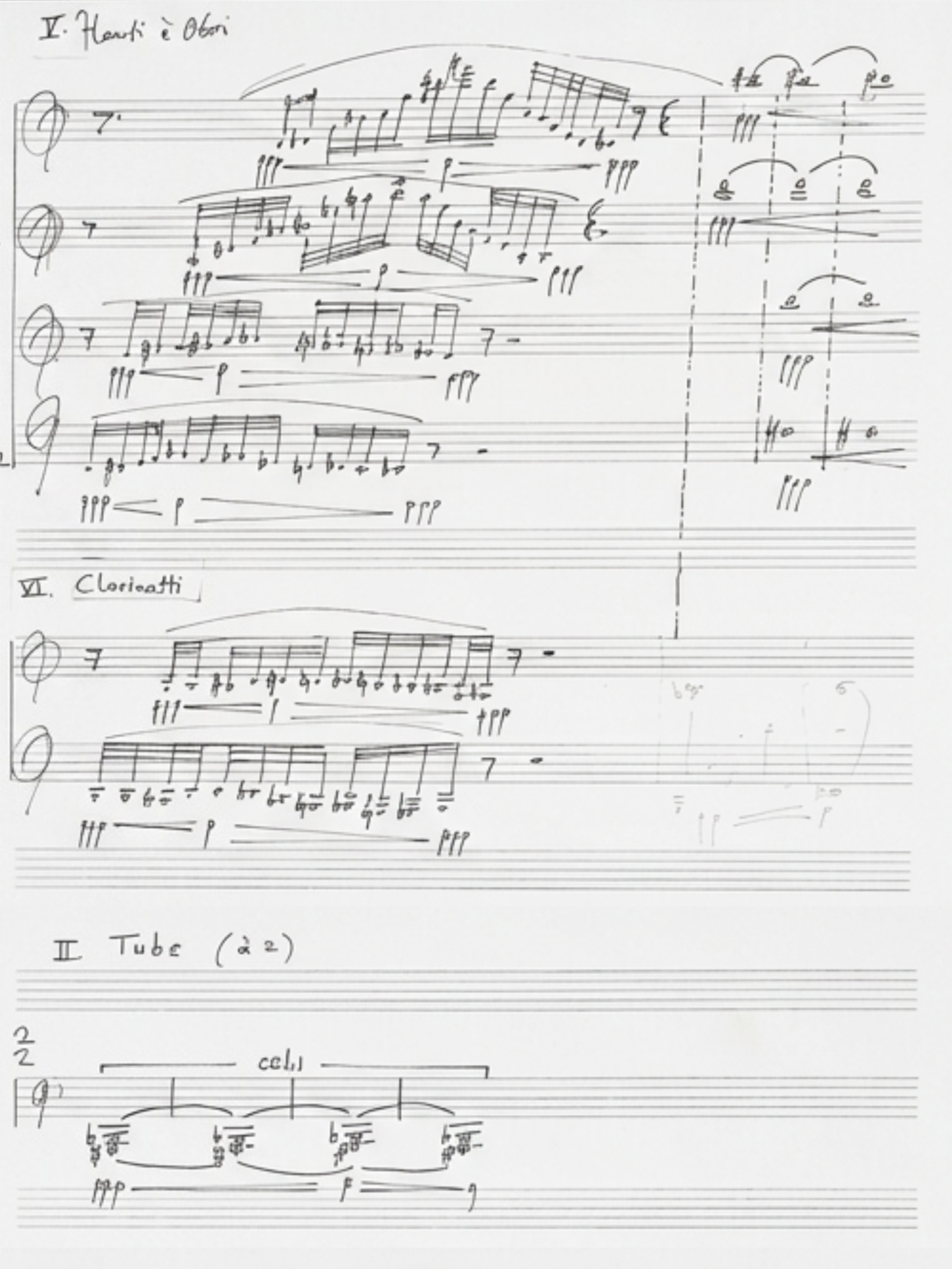
Borrowing five minutes of your time for a bout of insufferable pedantry is, I admit, a bit like inviting someone over to admire the grout in one’s bathroom tiles, yet here we are. One must approach the analysis of one’s own work with a certain measured distance, balancing a sheepish, tongue-in-cheek self-assessment with the grave, unblinking seriousness that musical architecture demands (or so I keep telling my morning coffee).
There’s simply no hiding it: I am an eclectic. Bone-deep, through and through. (whatever piece shows up on the page when I sit down to write, my initial burst of delight and sheer bewildered panic is entirely genuine).
At its core, most -- if not all -- of my output inhabits that uncomfortable, lovely, in-between space where the rigid steel scaffolding of modernism collides with an unyielding devotion to spatial breath, lyricism, and tactile beauty. Steering clear of both the austere starvation of academic high modernism and the endless, mechanical churning of traditional minimalism, this music tries to build an organic architecture. A landscape where acoustic micro-textures, subterranean chamber timbres, and glacially slow harmonic shifts dissolve the boundary between early modal polyphony and modern spectral restraint.
To make sense of this dual soul (and perhaps to sound vaguely organized), my compositional universe relies on two interconnected lenses:
Lyrical Constructivism and Alchemical Minimalism.
At the heart of the system lies an ongoing, mildly neurotic conversation between classical functional harmony and modernist ambition. Rather than marching dutifully around the circle of fifths or manufacturing cheap theatrical drama, the music is left free to function as shiftable, luminous color-thresholds. Harmony glides laterally across distant landscapes; every shift is less a dramatic arrival and more a subtle change in afternoon lighting, refraction, or gravitational pull.
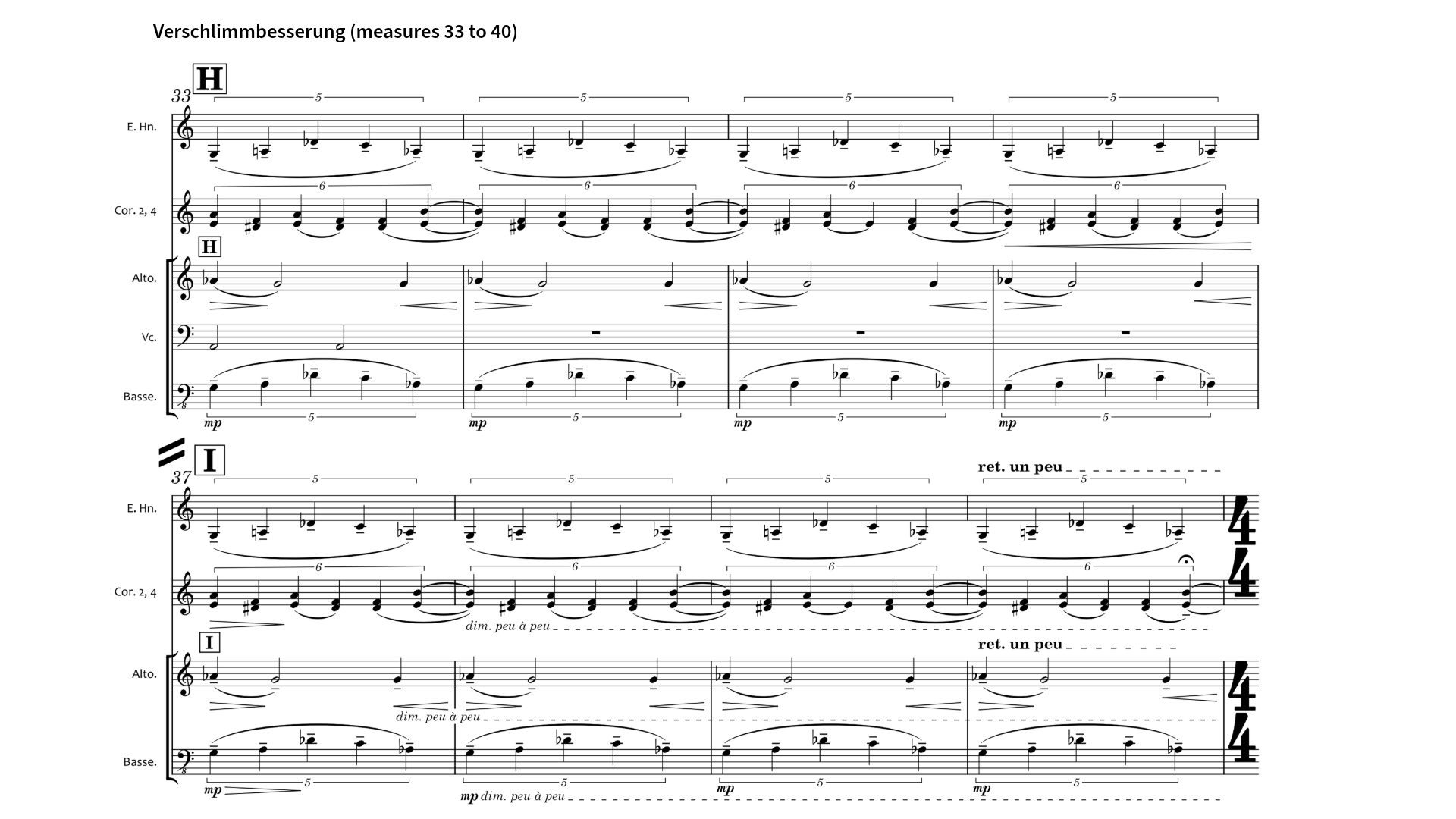
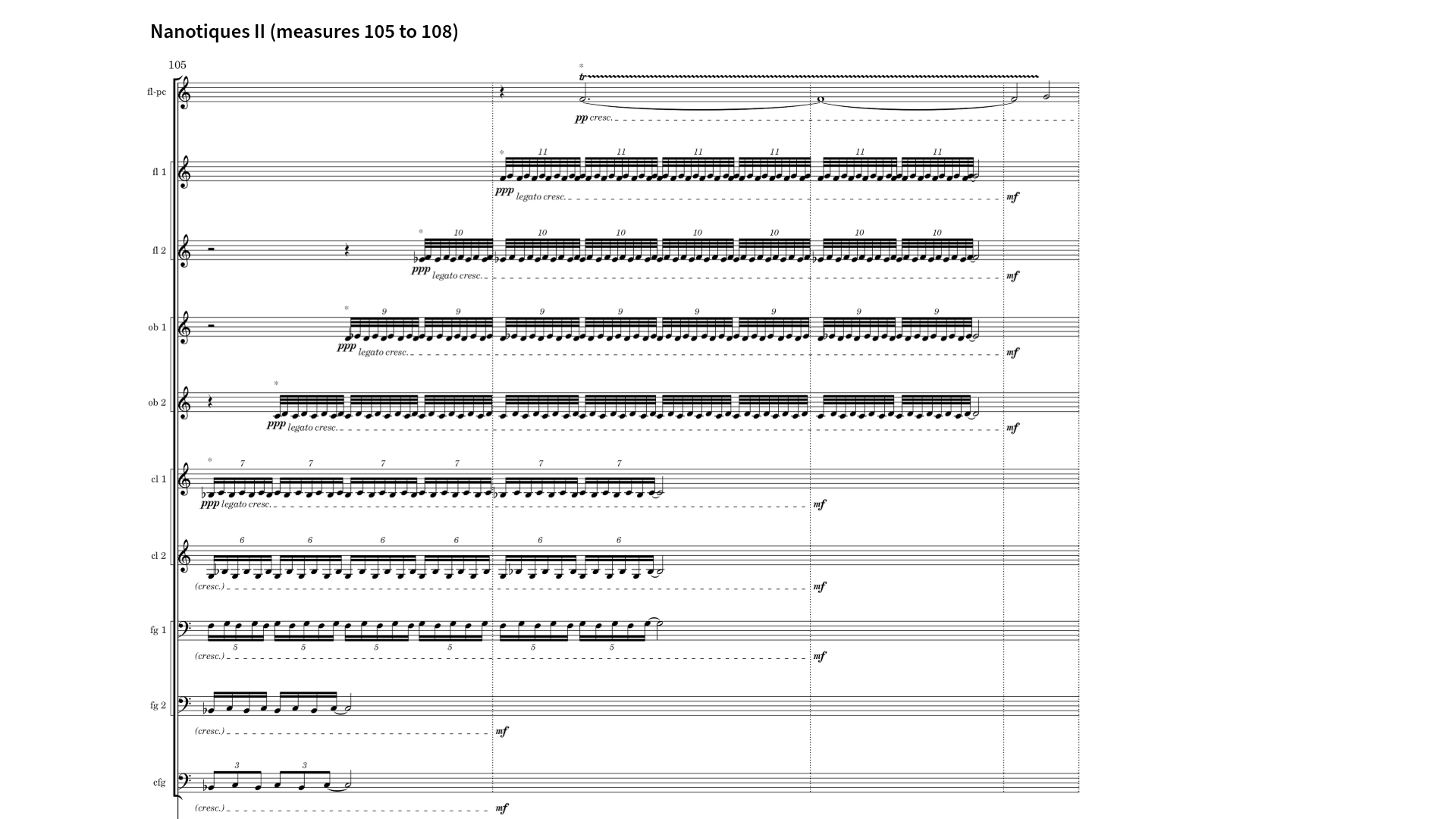
Lyrical Constructivism provides the structural scaffolding for these journeyings. Take Verschlimmbesserung or Nanotiques: towering, overly ambitious edifices of dense polyphony where quintuplets and sextuplets wage quiet, polite warfare in the low reeds.
Yet this vertical density is never allowed to collapse into academic noise, nor do I wish to starve the audience into submission. Instead, these complex constructivist passages act as compressed energy waiting for permission to unfurl. They resolve by blossoming outward into wide, open chromatic seconds and mediants, allowing dense knots of counterpoint to spill over into long, dramatic gasps of Lento air. It is modernism, certainly, but anchored by a very deliberate -- and thoroughly necessary -- diatonic sense of ventilation.
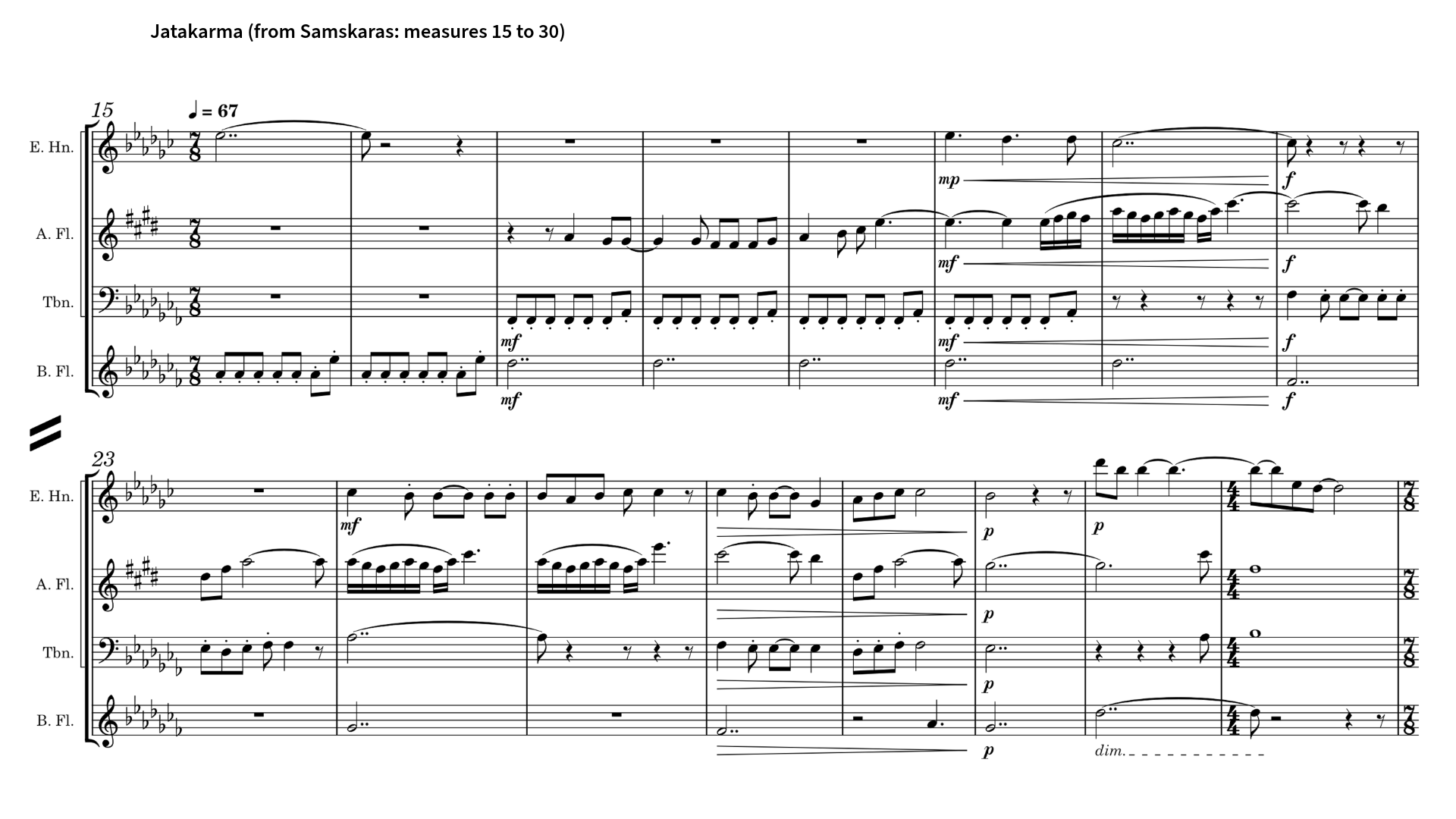
Through Alchemical Minimalism, these harmonic shifts stop rushing about and settle down into lingering, elemental states. Across my quadrilogy (Nebenfarben, Samskaras, Prospero, and Seven Manieren Van Minnen), movements such as Jatakarma or Blumpoth unfold at an unhurried, meditative crawl (MM = 70), treating fragile melodic fragments like hesitant brushstrokes across a dark canvas.
Eschewing the noisy theatricality of tutti bombast and relentless motoric drive, the orchestration behaves like a finely calibrated, slightly introverted chamber organism. Crystalline accents of celesta, vibraphone, and harp sit alongside a sort of subterranean machinery -- brooding bass clarinets, baritone saxophones, contrabass flutes, and low cellos -- anchoring the sound in an earthy, autumnal gravity rather than the glassy, treble-heavy sheen popular late last century.
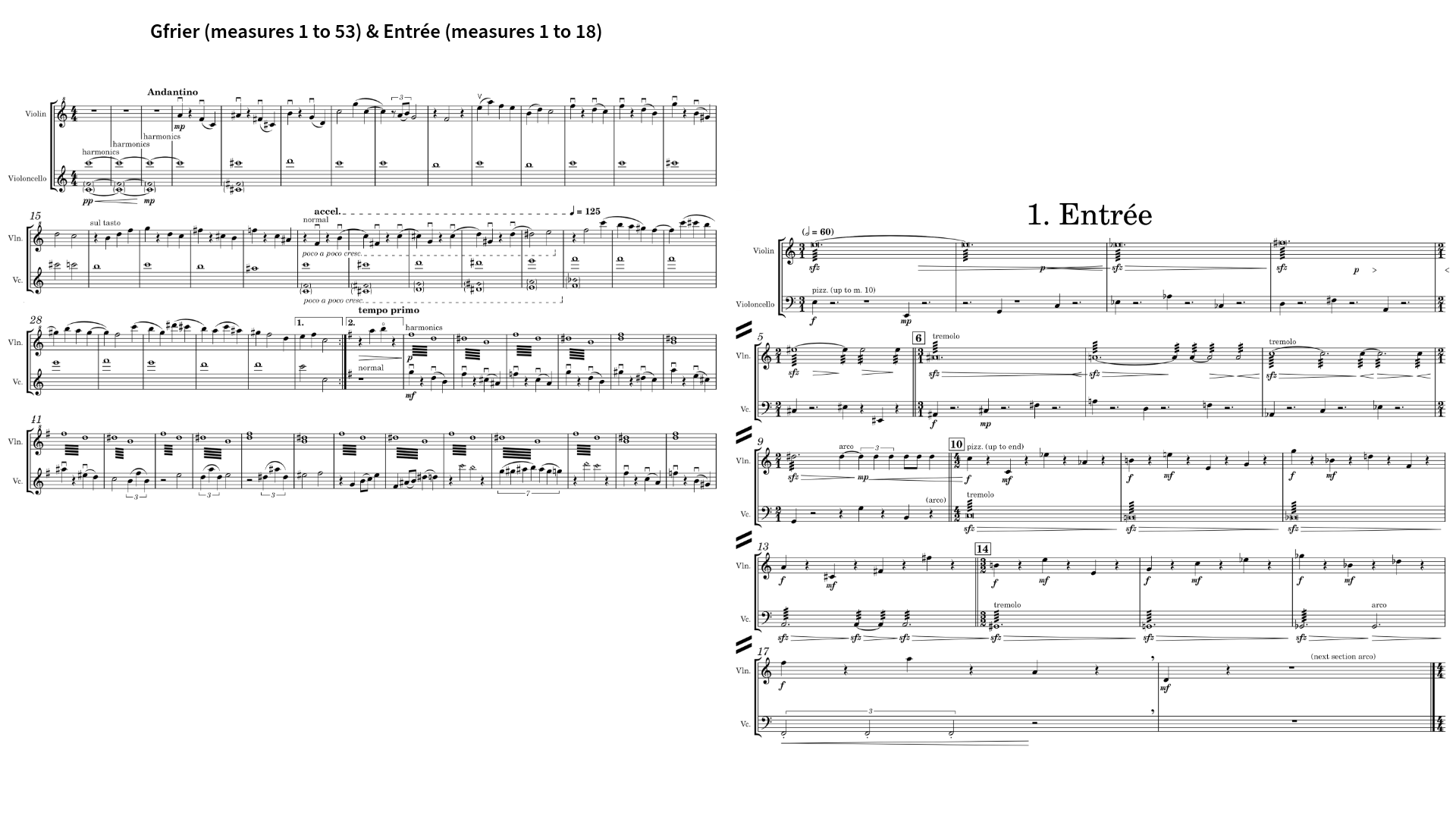
Infused with fluctuating meters, unhurried ritardandis, and a subtle splash of Renaissance rubato, the music flows like a turning tide rather than moving by brute harmonic force. Even in full orchestral expanses, a quiet, conversational intimacy remains, distilled to its bare, shivering essence in works like the violin and cello duet Gfrier.
Ultimately, the music aims to be an organic framework for spatial color portals. Contrapuntal constructivism generates internal friction, which periodically unfurls across third-related shifts into spacious, deep-register resonance beds.
By replacing relentless motoric repetition with physical, acoustic decay, it quietly rejects the silly notion that intellectual rigor and accessible beauty can't sit in the same room. It marries the discipline of modernism with the spatial tranquility of early polyphony, proving, or at least politely suggesting, that modernism need not be an exercise in audience alienation, provided every structural knot is allowed to uncoil toward the light.
And yes, stripped of the bravado, it is essentially a post-modernist, rather traditional way of putting notes on paper, largely devoid of the usual avant-garde parlor tricks. But then, so is my cat and he gets along just fine.
(Then again, tomorrow morning I shall probably wake up and write something entirely different.)